Draft v1 — Journal page
— full article bodies are placeholder drafts in Tom's voice, to be replaced with the original Substack text.
The Procrastinaging™ Journal
Online medical information on aging and aging-related conditions.
The Procrastinaging™ Journal is an ongoing library of online medical information about aging. It is written and reviewed by Tom West, the original Procrastinager™. New entries weekly. Free to read. It is meant as a useful first source, not a substitute for personal medical care. To work with Tom directly, book a consult.
Tom West
Procrastinager™ · Founder, Procrastinaging.com
Home is where the Procrastinaging™ happens.
Most of the work of putting aging off does not happen in a clinic or a gym. It happens between the kitchen and the front door, in the small, repeating rooms you already live in.
I have spent the last year asking older clients a slightly awkward question. Where, exactly, does your aging happen? Not in the abstract. In the literal house. Which room. Which doorway. Which chair.
The answers are very consistent. The bedroom, because of sleep. The kitchen, because of food and pills. The hallway between them, because of falls. And the chair in the living room. Always one specific chair. That is where the slow, quiet hours collect.
If we are going to take Procrastinaging™ seriously as a practice, we have to take the floor plan seriously. The house is where this all plays out. The Procrastinager™ is the person who helps you set it up.
The four rooms a Procrastinager™ pays attention to
The bedroom. Sleep is the first medicine. If sleep is broken, every other fix is renting a result that the bedroom is undoing for free.
The kitchen. The pillbox lives here. So does breakfast. So does the table, which is the social half of food. All three matter for more conditions than I can list.
The hallway. Lighting, rugs, and the path between bedroom and bathroom at 3am. Some of the cheapest fixes in medicine still happen with a roll of tape.
The chair. The quiet chair. The one with the best view of the television. We are not against it. We are against only it.
What this looks like in a consult
When a new client books a Procrastinaging™ consult, the second session is almost always a walk-through. Sometimes literally, by video. Sometimes by photo. We are not redecorating. We are checking the room. Where is the light. Where is the rug. Where is the pillbox. Where is the chair.
The most common Procrastinaging™ fix I suggest in year one is not a supplement, not a lab test, and not an MRI. It is a lamp.
The point is not to turn the home into a clinic. The point is the opposite. The home has been quietly handling about 90 percent of your aging on its own. Some of the easiest wins you will ever make are sitting in plain sight.
Procrastinaging™ is the practice of putting aging off on purpose. The house is where most of that purpose has to live.
Three things to try this week
Walk the path you take from bed to bathroom at night. Do it in the dark. List what is in the way.
Open the cabinet where your pills and supplements live. If the order they are in is not the order you take them in, fix that today.
Sit in the chair. Set a timer for one hour. Notice, honestly, how often it is two hours.
If any of this is interesting, the Procrastinaging™ practice runs private consults on exactly this kind of work. That covers the diagnosis and treatment of aging-related conditions, including the ones in your floor plan.
Originally published on Age Against Machine. Republished here with light editing for the Procrastinaging™ Journal.
ii.
Procrastinaging™Apr 08, 2026
~ 2 minute read
Tom West
Procrastinager™ · Founder, Procrastinaging.com
Procrastinaging™. When procrastination is finally useful.
For most of your life, procrastination has been a vice. There is one situation in which it is, on the medical evidence, a virtue. This is that situation.
I want to be precise about a word, because the Patent and Trademark Office is making me be precise about it. Honestly, the precision is good for the practice too.
Procrastination, in the everyday sense, is putting off something you should be doing now. It is an act of avoidance, and it usually costs you. Procrastinaging™ is something else. Procrastinaging™ is the careful, evidence-based practice of putting off the symptoms, conditions, and habits of aging. We do this for as long as the science will let us. A Procrastinager™ is a consultant whose job is to help you do exactly that.
One word delays your taxes. The other can delay your heart trouble by, in some studies, a decade.
The case for putting one specific thing off
Most of what we call "aging" is a stack of conditions that mostly show up on a schedule. Memory shifts. The way your body uses food shifts. Mood and sleep shift. Your heart and blood vessels shift. They don't all arrive at once and they are not all equally avoidable. But a striking number of them respond, in real numbers, to small fixes. If you started those fixes ten years earlier, people would have called them paranoia.
The Procrastinaging™ practice is built on a simple, slightly contrarian belief:
The right time to procrastinate is not when something is due. It is when something is arriving.
What a Procrastinager™ actually does
This is the question I get most often, usually after the laughter. Here is the honest answer.
We diagnose. Real labs, real history, real medical review. Procrastinaging™ is not a vibe. It is a practice in the field of aging-related and psychological conditions.
We plan. A written, dated, six-month Procrastinaging™ plan. The plan is in plain language. You can show it to your doctor. You can show it to your spouse. You can show it to your CFO.
We schedule. Working sessions every two weeks, sixty minutes each. By telehealth or in person. The sessions are short on purpose. A Procrastinager's™ job is not to be your new hobby.
We measure. Every quarter, the same four questions. What changed. What didn't. What surprised us. What to do next.
Who hires a Procrastinager™
People in their fifties and sixties who have noticed something, usually small, and would rather notice it twice than ignore it once.
Adult children of aging parents who want a third party in the room.
RIAs and family offices who have run out of things to optimize on the spreadsheet and have quietly started to optimize the person.
If any of those sound familiar, a 30-minute Procrastinaging™ consult is a low-cost way to find out whether the practice is for you.
Procrastination is a vice. Procrastinaging™ is a service. The difference is the science behind it, and the consultant on the other end of the line.
Originally published on Age Against Machine. Republished here with light editing for the Procrastinaging™ Journal.
iii.
Age Against The MachineApr 02, 2026
~ 6 minute read
Tom West
Procrastinager™ · Founder, Procrastinaging.com
Tom here. I’m handing this week’s post over to one of my oldest friends, Brandon Trissler—a content marketer who’s been helping me edit and prep AATM posts since we launched.
Brandon, unlike me, is a self-professed procrastinator, so I asked him to try out some approaches to reality checks and resolutions that I wrote about previously. We can see if these frameworks might, or might not, help with procrastinaging.
Meet the new me, same as the old me?
I’ve never put much stock in New Year’s resolutions, primarily because I am in the group of 9 out of 10 who fail to keep them. Over the years, I convinced myself that resolutions were a waste of time and an arbitrary invention like Valentine’s Day or nu metal.
Tom’s take on resolutions made me reconsider my humbug attitude. His approach to do a reality check and then take a step-by-step process to achieving resolutions made me think this year could be different.
Would I have a road to Damascus moment and be reborn with my resolutions? Or would old habits die harder than John McClane?
Goodbye optimism of Past Me, hello reality of Future Me
The reality check step was the part I’d always skipped. Rather than telling myself to “get healthier” or “write more,” I had to realistically assess where I was in terms of physical function, work stress, and work-life balance.
The other change was in how I formed the resolutions themselves. Instead of the traditional aspirational approach that nearly always fails because we’re overly optimistic about what we could do, I visualized my future self at the end of 2026, focusing on the how over the what:
Step 1: Get in the head of future you. I visualized a retrospective narrative of how I achieved my goals, which illustrated the steps to get there. Basically, I would look ahead to write the story of my success (easy when you’re already a writer, right?).
Step 2: Extract process from the story. Along the lines I mentioned, you write a resolution that includes behavior, a system, or decision. Instead of “I need to do more retirement planning,” it’s “I am going to use retirement calculators to assess different retirement scenarios and talk with a financial planner about those different options.”
Step 3: Succeed through quarterly check-ins instead of failing to keep daily promises. Which is what I’m doing now!
Step 4: Visualize your freedom from your resolution. This is a big but important change, because you gain mental bandwidth back once you accomplish your goal.
The resolution scorecard: One A-, one C-, one D+
With all this self-assessment and future visualization in place, here are the resolutions I set and how I graded myself:
Resolution 1: Planning for my daughter’s transition to college this fall (A-)
Future visualization and extracting process from the story worked well for this very important resolution. I could start with visualizing my daughter being at campus and work backward to determine the steps: deadlines, aid packages, researching outcomes and support services, and all those important conversations about what she wants out of college.
Campus tours were a big part of Resolution 1. This was Seton Hall University.
As far as paying for college, we are also navigating two options: taking a full-tuition aid package at one school vs. taking a lesser financial aid package at my daughter’s top choice. Again, we are using future visualization to help: What does it look like to have loans vs no loans? Do we see a brighter future and more ROI from the top choice? We have until May 1 to make a final decision, but for the first time, a resolution felt more like a planning process instead of a wishful thinking exercise.
Resolution 2: Make a real plan for pre-retirement (C-)
Having the goal of successfully choosing and paying for college nearly complete, I visualized having freedom from a resolution: what would my wife and I do after our daughter leaves? That visualization made me realize that we have not taken the right steps toward planning for our next ten years or so before we want to retire.
I have become more aware of this since I started working on AATM posts with Tom. My wife and I have been good about contributing to our 401ks and are pretty sure we’ll be fine in retirement. That, however, is more of the makings of a plan than a plan.
More importantly, it’s the period between now and retirement that seem more murky financially. Fifteen years into owning a home that’s nearly 100 years old, a rash of needed repairs revealed the softness of our monthly cash flow. That’s okay, we can always sell the house at a tidy profit and buy a condo in the city like the hipsters we are, we told ourselves. Except after talking with realtors about what we’d need to do to get the condo we wanted, we realized that would not happen if we had to buy on contingency.
I’ll give myself a C- because we learned what else we need to learn. But I realized I have to get more analytical and less aspirational in planning our financial future…and consider getting some professional advice to secure the retirement we want and still be able to help our daughter post-graduation.
Resolution 3: Improve my physical function and reduce my stressors (D+)
This is the one where I fell down completely. It’s April and I have not touched my Peloton. I spend 12+ hours a day in my office chair, which is terrible for my functional health. And I’m still back at my desk after dinner most worknights.
Why not an F? Because the GLP-1 medication I started a year ago has helped me lose five more pounds this year – 20 overall – and my blood pressure has dropped to near-normal. Tracking both my weight and BP in an app has helped me make sure those numbers stay manageable.
But just like needing to plan my financial future in the next ten years, I need to plan my physical one as well. What good will it do me to strengthen my financial position only to have poor physical health from a sedentary lifestyle? Or worse — that hypertension lives up to its nickname, “The Silent Killer.”
So I am making changes to limit those late-night work sessions to no more than two nights per week and schedule three days of workouts that are as locked in as a doctor’s appointment.
The big lesson: Check-in and move on
As I put this together, I realized how much of my new approach to resolutions still resembled my old approach (again, Procrastinator here). Previously, I would have said humbug and ditched the resolutions until next New Year’s. However, that’s what I like about this quarterly check-in approach. I haven’t failed, I’ve assessed, and now I can recalibrate. I can still shape my 2026 story that I’ll be happy to reflect on by New Year’s Day.
Tom again. One of the things I’d hoped this post might do is show how quarterly check-ins aren’t performance reviews. They’re a chance to take an honest look at how we’re doing and recalibrate. Exactly how Brandon’s C- and D+ on Resolutions 2 and 3 are more helpful to him than an easy and fake A would’ve been.
If you’ve been tracking your own resolutions, we’d love to hear from you. What’s working, what’s still a struggle, and what adjustments have you been making?
iv.
Habits & ResolutionsMar 24, 2026
~ 2 minute read
Tom West
Procrastinager™ · Founder, Procrastinaging.com
Reviewing my resolutions, checking in at quarter one.
A Procrastinager's™ year-in-review, performed at the right cadence: every ninety days, in writing, with a pen.
Most New Year's resolutions die in February. They were never resolutions. They were wishes dressed up in a January coat. A Procrastinager™ does not write resolutions. A Procrastinager™ writes a plan, and then reviews it on a schedule. This is mine, ninety days in.
What I said I would do in January
Sleep seven and a quarter hours, on average, on workdays.
Walk an hour outdoors before any screen, three days a week.
Lift twice a week. Real weight. Real form. No phone in the room.
Get the lab panel I have been putting off since 2024.
Talk to one client per month who is older than I am about how the second half is going.
What actually happened
Q1 is the cleanest report card a Procrastinager™ ever gets, because nothing has had time to drift. Here is the check-in.
Sleep. Hit. 7h21m on workdays, on average. The fix was a single lamp on a timer, exactly as I prescribe in the home walk-through.
Walks. Partial. Three days became two. The variable was weather, which I had under-weighted as a real medical input.
Lifting. Hit. Two days a week, no exceptions. The phone-out-of-the-room rule was the unlock.
The lab panel. Done in week three. Two numbers were boring. One was interesting. We are working on the interesting one.
The client conversations. Hit, and the most valuable item on this list. Three of those conversations turned into the Procrastinaging™ practice you are reading.
What a quarter-one review actually does
The point of the 90-day review is not the grade. It is the second column. That is the one a Procrastinager™ writes next to every line: what to do next.
The Procrastinaging™ year is four chapters, not one. Most failures are written in the first one because nobody reads it.
If you would like the Procrastinager's template for a 90-day review, it is the first thing every private consulting client gets. It is also the spine of the Procrastinager's Toolkit cohort.
A resolution dies in February. A Procrastinaging™ plan gets reviewed in March, June, September, and December, and outlives the year.
Originally published on Age Against Machine. Republished here with light editing for the Procrastinaging™ Journal.
v.
CognitiveMar 10, 2026
~ 1 minute read
Tom West
Procrastinager™ · Founder, Procrastinaging.com
Why a Procrastinager™ starts with sleep, not supplements.
Most aging-related decline begins with the eight hours nobody is paying attention to. A Procrastinager's™ first fix is almost always the boring one. It is also the most effective.
If a new client tells me, in the first session, that they are taking eleven supplements and sleeping six hours, I do not start with the supplements.
I start with the sleep. The supplements are renting an answer that the sleep is taking back every single night.
The Procrastinaging™ sleep audit
Hours. Average over the last fourteen nights. Not the best night. The average.
Time to sleep. How long it takes to fall asleep, in minutes.
Wake-ups. Count, not length. Three is a number a Procrastinager™ flags.
Light. First and last light of the day, in your eyes, on your skin. Most clients are getting almost none of either.
This is the cheapest, highest-signal piece of online medical information about aging I can offer in 400 words. The longer version is in the Procrastinaging™ workshops. The personal version is in the consult.
vi.
MetabolicFeb 24, 2026
~ 1 minute read
Tom West
Procrastinager™ · Founder, Procrastinaging.com
Procrastinaging™ your A1C. A six-week plan.
A plain-language piece of online medical information on metabolic aging: what an A1C number actually tells you, and what a Procrastinager™ does with that information.
Your A1C is not a grade. It is a rolling average. Roughly the last three months of your blood sugar, smoothed. A Procrastinager™ treats it the way a sailor treats a barometer: useful, slow, and worth checking on a schedule.
The six-week protocol
Weeks 1–2. Measure. Do not change anything. We are setting a baseline, not winning a race.
Weeks 3–4. One change, in the kitchen, at one meal. Usually breakfast. Always boring.
Weeks 5–6. Add a walk after the second-largest meal of the day. Twelve minutes. Outside, ideally.
This is not advice for any specific person. It is a template a Procrastinager™ would adapt for a real client, with a real doctor in the loop.
vii.
Age Against The MachineJan 15, 2026
~ 6 minute read
Tom West
Procrastinager™ · Founder, Procrastinaging.com
My wife and I recently became empty nesters when our daughter moved out. The house stayed the same, but our relationship with it didn’t. The questions of what we’re managing and why we’re managing it felt heavier.
When we moved in with our two small children, the house was really a container for raising kids, and our decisions to buy it were tactical: did it have enough bedrooms, was it close enough to schools, would it be able to accommodate all the activities and motion of raising kids.
Now the container feels overbuilt. It’s not the emptiness as much as the complexity. Managing a house at this stage of life is unlike anything we encountered at 35 or even 45. The decisions carry longer tails with fewer do-overs and more second- and third-order effects.
And for added complexity, both of my kids are opposed to any changes.
New wallpaper or wall colors? Four thumbs down. Downsizing? Opposed. Moving? Absolutely not, because why would you leave OUR house?
They see a connection to childhood, a fixed point they still orbit, even if they do it as satellites from their own places. Their perspective conflicts with our desire to adapt and future-proof our empty nest lives.
The sandwich generation problem and “place planning fatigue”
Now, what if we added a third generation to this decision tree: my aging parents. Many of us Gen Xers aren’t just thinking about our place—we’re also navigating place challenges with our parents.
A vast number of aging parents live in homes that no longer fit their changing needs, yet they have dug in about moving. They do nothing until circumstances force them to make a rushed decision.
That leaves us crushed between competing generations:
Our children pulling us emotionally backward.
Our parents pulling us administratively and operationally forward.
Our own planning stuck in the middle.
This is one of the least acknowledged dynamics of Gen X aging: place planning fatigue. We tell ourselves we’ll deal with our situation after we help our parents “figure theirs out.” Except theirs often never fully resolves until the status quo can no longer be maintained and families scramble for the least bad unpreferred outcome. Procrastinaging becomes intergenerational and co-dependent.
When every option feels wrong, the brain treats “no decision” as a decision—and rewards it.
From housing crisis to place planning
Ryan Frederick has been working this terrain for the last two decades. Author of Right Place Right Time and the CEO of Here.life, Ryan’s career spans senior housing, real estate, and private equity. I had him workshop with clients last year and was struck by how late—and how narrowly—place decisions tend to get made.
Most conversations focus on cost, taxes, resale value, square footage, or similar things. Rarely do they focus on how a place actually supports daily life, health, and connection over time.
That’s where place planning comes in. It’s not about convincing people to move. It’s about shifting the frame from house as asset to place as system. For Gen X empty nesters, this frame shift is overdue—and emotionally loaded.
Not seeing the place forest for the money trees
I see this play out constantly in my financial advisory work.
One late-70s couple, Timothy and Julia, came to me convinced they had a financial problem. Too much equity locked in the house. Anxiety about future care costs. Fear that staying put was irresponsible.
But the real issue wasn’t money, it was place. Their home required constant maintenance. They had to drive to go anywhere. Social interaction had dwindled. One partner had quietly stopped using part of the house because of stairs—something no spreadsheet captured.
Once we reframed the conversation around place—how they lived, who they saw, what would happen if mobility changed—the financial path clarified. They had previously thought that finances were the constraint, but we discovered they had it backwards. A move closer to services and community reduced risk, lowered stress, and freed capital.
Why place planning gets messy when parents also come into the picture
Ryan’s four dimensions—environment, health, community, and finances—rarely line up neatly. When we layer in our parents’ place needs on top of our own, the complexity increases exponentially.
For our own place planning, the questions are usually forward-looking:
How will this house support our daily life as we age?
What barriers does it create (stairs, distance from services, isolation)?
How much do we want to invest in maintenance versus adaptation?
Add the reality that many older parents are moving in with their adult children, and the calculus gets wider and more emotional. In 2024, roughly 17 percent of homes purchased were multigenerational—the highest in at least a decade—with Gen X leading the trend.
Suddenly place planning isn’t just about optimizing our life. It’s about reconciling:
What works for us now.
What might support our parents’ needs—including the possibility they’ll move in.
How staying put or moving might affect everyone’s health, mobility, and access to support.
How resources (space, money, time) get distributed among generations.
Critically, place planning isn’t a zero-sum negotiation. But it does require surfacing and aligning preferences that are rarely discussed openly. When everyone’s future well-being depends on where all of us live and how we live there, the trade-offs get sharper—and procrastination becomes easier to justify and harder to overcome.
Aging in place is a preference, not a plan
Here’s one of Ryan’s most useful reframes: aging in place is not a plan—it’s a preference. I hear my own advisor voice asking, “Is aging in place a default resignation or symptom of procrastination, or is it a proactive strategy with a defined process to enable success?”
Eighty-five percent of people over 50 want to stay where they are, yet only 15 percent have taken concrete steps to make that viable. If we’re looking for a concentration of Procrastinagers, here it is.
Gen X often sits with the evidence of that failure firsthand, watching parents forced into decisions by falls, hospitalizations, or burnout. Yet we still hesitate to act differently for ourselves, because many times we’re exhausted, we don’t want to open another front, and we’re already managing too much place complexity for everyone else.
Which is why Ryan is so right when he says that place is the least threatening way to talk about aging. It’s concrete. It’s observable. It’s neutral enough to start a conversation without triggering defensiveness. And it allows us to plan before decline, rather than in reaction to it.
Time to practice what I preach with my house
So here my wife and I sit, empty nest, kids advocating for stasis, inventory management challenges (more on that in a future post), and parents reminding me what happens when planning is postponed.
Thankfully, place planning doesn’t demand immediate answers. It does demand attention, however, which is why giving this moment my attention is important.
I’m not making any big decisions tomorrow (redecorating aside). But I’m done pretending that inaction is neutral. The house hasn’t changed, but the role it plays in my life has, and I want to plan what I’ll do about it before I’m forced to do something about it.
And for Gen X—caught between children, parents, and systems that only respond after failure—that may be the most radical act we can begin to take.
Disclosure: Client examples are illustrative only and do not represent the experience of all clients or any guarantee of outcomes.
viii.
Age Against The MachineNov 12, 2025
~ 5 minute read
Tom West
Procrastinager™ · Founder, Procrastinaging.com
Over the last two decades as a financial advisor, I’ve used a simple yet powerful framework to understand how people behave during major life transitions—whether moving into senior living, revising financial plans, or handling long-term care. It isn’t about age, income, or education. It’s about how people approach time, change and decisions.
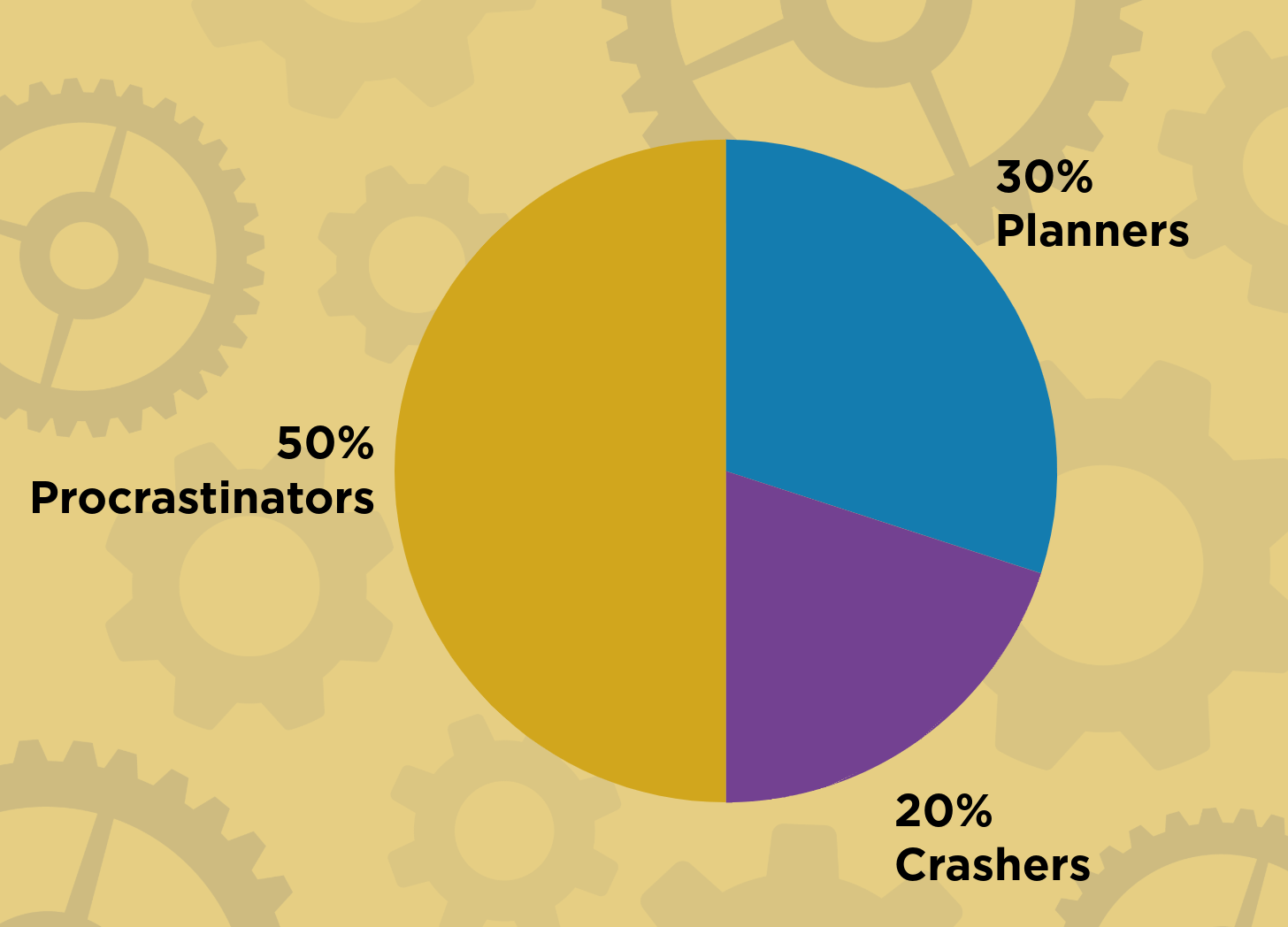
I divide people into three groups: Planners, Procrastinators, and Crashers. The model works because it matches people’s actual behavior—not how we wish they’d behave. And if you’re supporting one of these types of people—as a family member, caretaker, or advisor—this framework might be useful to you too.
I’ve also included things to think about based on which type of person you are, so you can see your blind spots better and work more effectively with advisors or anyone else helping you prepare for what’s ahead.
1. Planners (≈ 30% of people)
Planners are the people everyone says they want as clients—organized, forward-looking, and prepared. Their wills are up to date, long-term care coverage in place, and they’ve already spoken to their loved ones about what’s ahead.
They anticipate change rather than simply react to it.
But here’s the catch: Planners often don’t want to ‘buy’ advice that doesn’t improve what they have done for themselves already. They’ve read the books, downloaded the forms, maybe built their own worksheet. When advisors step in, planners don’t want them to take over—they want them to add value. Basically: Do it with me, not for me.
How to support planners:
The best way to work with a planner is to expand their field of view and bring something they haven’t considered, or serve as the Plan B safety net if they’re not the one executing the plan later.
Planners don’t need rescuing and reject the concept of being rescued. They need partners who respect their independence and add depth where needed.
As an advisor, I support planners by offering validation, deeper insight, and optional delegation. They already have a plan—my job is to help ensure it stays alive.
If you’re a planner:
You’ve already done the work, and you probably resist people who try to tell you what to do. That’s fair. But consider:
Who will execute your plan if you can’t?
Are you open to one or two blind spots being pointed out?
Do you assume you’ll always be able to handle things? (That’s often a planner’s most dangerous assumption.)
2. Crashers (≈ 20%)
Crashers are at the opposite end of the spectrum.
They don’t plan. They don’t prepare. Advice, checklists, tools—these wouldn’t inspire crashers to act even if hypothetically the crashers were aware of them. They live reactively. Eventually, life happens and they crash into consequences.
I’ve seen this pattern again and again: Despite all the resources around them, crashers soak up all of the resources and attention, and the only two things that can improve their outcomes are luck and somebody rescuing them.
Crashers aren’t always lazy or ignorant—they’re sometimes overwhelmed, disconnected from cause and effect, or caught in avoidance. But their crash, while sometimes sympathetic and sometimes avoidable, is also predictable.
How to support crashers:
Crashers represent a systems challenge. They expose where the safety nets are weak, where communication fails, where the “just in case” cushion is missing.
The goal isn’t to “fix” crashers ahead of time—but to design reactive supports that stabilize chaos when crisis hits and create a pathway to recovery. And for the planners and procrastinators among us, consider the crashers in your life that can hijack your priorities and circumstances as a maybe-rescuer.
If you’re a crasher:
If you’re reading this, you’re probably not a crasher. But if you think you might have some crasher tendencies, just know that others will end up bailing you out. So at least be the person they’ll want to help when the crisis arrives.
3. Procrastinators (≈ 50%)
Then we have the largest group, and I suspect this is where most of us live: procrastinators.
Procrastinators generally know what they should be doing. They’ve downloaded the forms, perhaps started the conversation—but something keeps them from finishing.
They might talk like planners and maybe even think they are planners, but they don’t act like them.
The mistake many professionals like me make? Trying to turn procrastinators into planners. That doesn’t work because, by definition, procrastinators have put something off that should have been addressed.
How to support procrastinators:
What actually works is to be ready for them.
When something breaks—a health issue, a family conflict, a financial surprise—that’s when procrastinators spring into action. When their options are taken away, they become motivated, self-aware, and ready to act.
The procrastinator framework aligns perfectly with what I’ve seen and learned in 30+ years as an advisor. Shaming or inspiring procrastinators into planning isn’t efficient, and is often rejected outright. What needs to happen instead is to create systems on a personal, a family, and a social level that activate when their readiness peaks, via prompts, modular options, and just-in-time support when a weak link breaks—whether that weak link is health, money, or family—and help them fix it quickly.
If you’re a procrastinator:
Stop waiting for the perfect moment—it won’t come
Identify your likely “weak link”: What will probably force your hand? A health scare? A financial crisis? A family conflict?
Set up one trigger now: “If X happens, I will immediately do Y”
Do 80% of something rather than 0% of everything
Why this framework is psychosocial, not financial
One of the truths I’ve learned: this framework has nothing to do with wealth or education. You’ll find planners earning modest incomes and crashers with six-figure salaries. This is about temperament, coping style, and how people relate to time.
Helping someone connect emotionally with their future—helping them imagine it clearly and see themselves in it—is one of the most powerful ways to reduce procrastination and prevent a crash.
The life preserver role
As I said about crashers—if you’re reading this, you’re likely not one. That means you can play an important role—as a life preserver.
Maybe you’re the planner in your family, helping a sibling who avoids decisions. Maybe you’re a procrastinator who’s finally ready to help a friend through a crisis. Whatever the case, your readiness may make the difference for someone else. And when planners, procrastinators and crashers interact, their lives and outcomes matter to each other.
Moving forward
People don’t behave like models in spreadsheets. They move between states of readiness. They sometimes plan, sometimes delay, and sometimes crash.
The Planners, Procrastinators, and Crashers framework gives us a language for that—it helps us see our families and ourselves more clearly.
Understanding which category both you and your loved ones fall into won’t automatically fix difficult situations. But it will help you stop fighting against human nature—yours and theirs—and start working with it instead.
ix.
Age Against The MachineOct 08, 2025
~ 7 minute read
Tom West
Procrastinager™ · Founder, Procrastinaging.com
Procrastination as we age is such a complex issue that I initially thought I’d call this Substack ProcrastinAging™. Ultimately I wanted to write about more than procrastination, but its still a main theme that keeps running through how I work with clients and think about aging.
How has procrastination changed for you as you’ve gotten older? Let me know in the comments. And if you haven’t yet, be sure to subscribe here.
Dr. “Matt” was a fantastic oncologist in the Washington, DC area, renowned for his compassion, expertise, and ability to communicate hard truths and difficult choices to patients in their fights against cancer. He was a long-time client of mine, but I also looked up to him. I even called personally about the challenging issues our family faced with my mother-in-law’s fight with cancer.
The fact that I looked up to him so much made it all the more difficult to face his family after Dr. Matt passed. It was especially hard to confront the many things he’d left undone in his planning.
However, I did not have the heart to share that with his grieving wife and adult children. “Your husband did a great job in planning with us,” I said. “We know what needs to be done and our team will help you and your kids with everything. We will go through this estate process together and keep things as easy and stress-free as possible.”
“Thanks, Tom,” his wife said. “You and your team were always part of the plan for me. And we all know Matt was always on top of the finances.”
Dr. Matt was not on top of his finances, and because of that, this would be far from easy. We had weeks of extra work ahead of us, with endless signatures and authorizations to clean up this financial picture.
His wife and children were also strangers to me and my team, despite my urging Dr. Matt for years to make changes to his estate planning and introduce us to his successor decision-makers. After this meeting with them, we audited our records for our discussions of his planning and the shortcomings we’d seen:
When we advised him to put guardrails on his documents if he ever lost capacity: “Nope, don’t want to make that change. My kids are going to have a field day with that. No thanks.”
When we told him about simple steps he could take to reduce his taxes at death by a dramatic amount: “Not going to pay that for an attorney to make that change. It’s too expensive.”
When we offered to consolidate titling of accounts for ease of administration now and down the road: “My wife won’t sign anything, she doesn’t understand any of this.”
Was this normal procrastination or something else? How is it the same or different to put things off when you are older compared to earlier (and relatively) younger ages?
Procrastination usually gets better as we age…
Procrastination is defined as the voluntary delay of intended action, despite expected or probable harm. Every parent of a teenager knows that teens are particularly susceptible to procrastination. Much of this stems from young people engaging in temporal discounting, favoring immediate rewards over long-term benefits. Their fear of disappointing parents and teachers may make them put off a task. They may also turn to easy distractions like TikTok instead of their textbooks. They may wonder, “Why do I have to do this thing when I have infinite time ahead of me?”
As we get older, procrastination usually gets better. As we “adult,” we learn that we have to get shit done to achieve our goals or avoid undesirable consequences. Fear of failure because we did not do something may motivate us to act.
But something changes with some of us as we age…like Dr. Matt. As he got older, I detected signs of loneliness and mild depression that probably contributed to him putting things off.
Denial about a material change in life might look like procrastination, but it might be more a failure to accept that the status quo can no longer be maintained. Then there’s cognitive impairment, a different animal altogether. It’s hard to get things done when you can’t find your to-do list.
…Unless it morphs into a new beast: ProcrastinAging
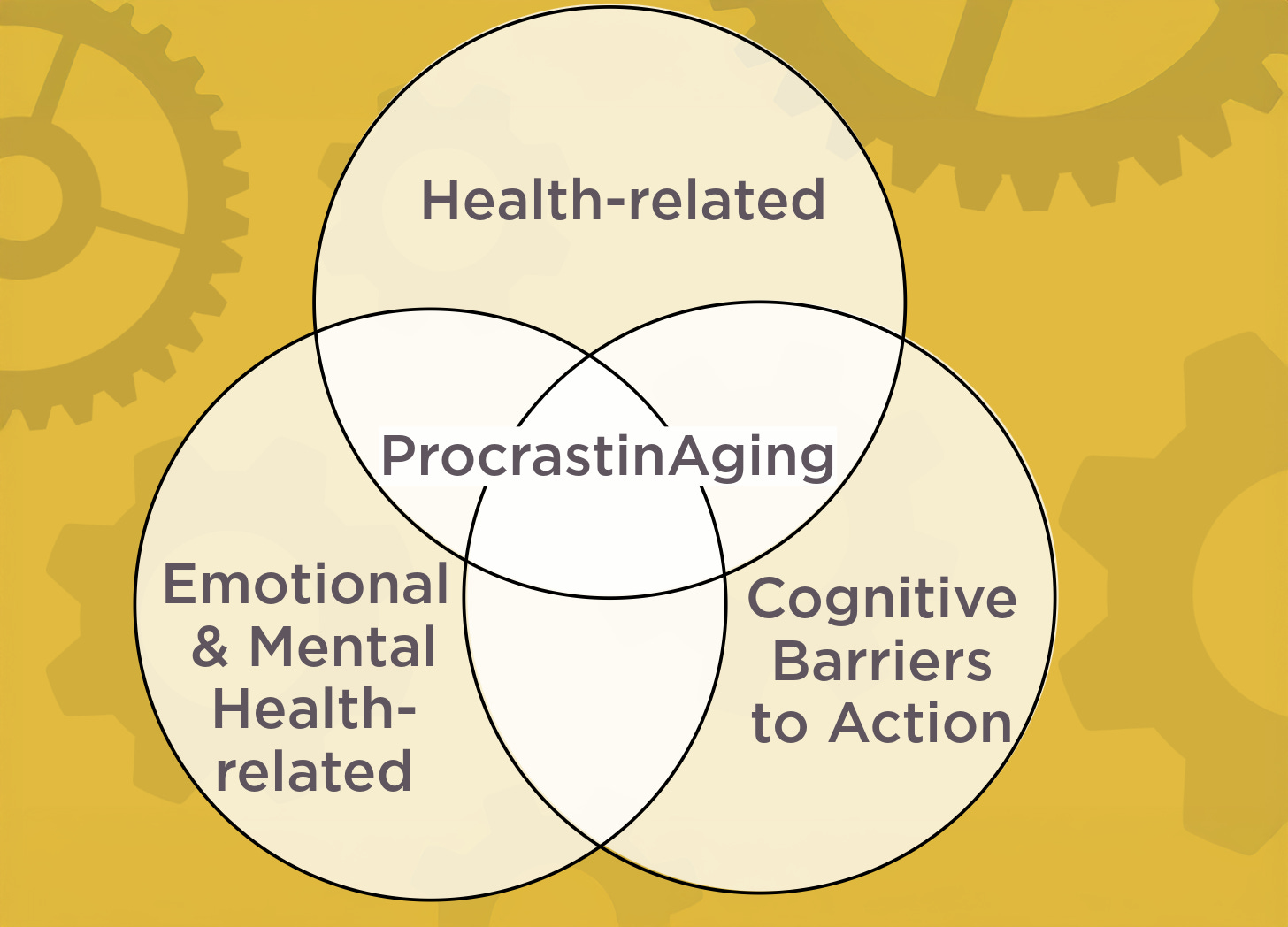
“ProcrastinAging” is a term I created to describe behaviors I have seen that look like procrastination but are something else. Think of it like procrastination with old man strength: it doesn’t flex as often as it used to, but when it does, its grip is insanely strong.
Here are the key differences between procrastination and ProcrastinAging:
A lower frequency of putting things off as we mature, but riskier consequences with the things we do put off.
A tendency to put off health care, finances, and estate planning compared to school, work, and social commitments when younger.
Having “fear avoidance” that revolves around illness, mortality, and dependence instead of the failure avoidance and short-term distractions when we’re young.
All of this happens in older adults who have the life experience to know how grave some of these behaviors can be—such as skipping medical appointments—but put them off anyway.
Health-related: Procrastination led to reduced screenings and regular check-ups. [Source]. Emotional- and mental health-related: Loneliness and depression increase instances of task avoidance, which in turn worsens the same emotional states. [Source]. Cognitive barriers to action: Age-related changes in the brain involving working memory and executive function can make task initiation harder, especially if multiple steps are involved. [Source]
Here’s how you slay the ProcrastinAging beast today! Or maybe tomorrow! Next Thursday for sure!
Something as big as ProcrastinAging is not easy to slay, and I’ll dive into some of these strategies in more detail in future articles. But these five strategies are good places to start:
Break big tasks down: The daunting nature of health care or estate planning can make anyone want to put it off. Make that planning more digestible by tackling it step-by-step, triggering a sense of accomplishment by reaching each goal along the way.
Add routine and structure: Many steps make light work, and accomplishing each step is much easier when you automate reminders and find accountability partners to keep you on task.
Reframe rewards in a positive way: Fear may be a motivator, but it is also a procrastinator, too. Try focusing on what we are hopeful for and the positive outcomes we’ll achieve.
Address emotional roots directly: Many professionals in general, let alone financial advisors, avoid naming anxiety, loneliness, or depression matter-of-factly. Courage takes many forms, and we should be talking about each of these issues as we get older as a matter of course.
Attack temporal discounting head-on: Make the abstract future as tangible as possible. The more real that future seems, the more motivated you’ll be to achieve it.
Avoiding ProcrastinAging by visualizing its effects
Another effective tactic I use with my clients is asking how their “plan” might fail. I tried this with Dr. Matt. I asked him about how, when he had to recommend prescriptive treatments that also had unwelcome trade-offs such as chemo or surgery, did he get patients to comply?
“I reminded them that others have struggled with similar choices already. I told them that the patients who were most at peace with their decisions often reflected that their acceptance came down to very personal principles and a clear-sighted view of what was likely coming down the road. I also told them that putting off unwelcome trade-offs had its own risks.”
With this set up, I came back a few minutes later and asked about the recommendations to his estate plan that he had not finished. “What’s your clear-sighted view of what may be coming down the road? Are there any personal principles you want me to know related to your unfinished legal plans for you and your family? Any unwelcome trade-offs?”
He was silent for about ten seconds before he said, “You made your point, Tom. Give me the list again, and I’ll get back to you, I promise.”
I believed him, and I still believe he was sincere. When his number showed up on my phone the following week, I expected that we’d finally work on these outstanding estate issues.
Instead, it was his wife. “Oh, Tom, Matt had a stroke last night and died.”
It was devastating, and I felt terrible for his wife and children. But it also demonstrates something important: That to accomplish those goals and those many steps we take to make things as easy as possible for those we leave behind, we have to visualize what happens if we don’t. Because you do not want to let ProcrastinAging win, and you never know how long before the game is over.
“Convergence of Age Differences in Risk Preference, Impulsivity, and Self-Control: A Multiverse Analysis.” Tisdall, L., Mata, R., Frey, R., et al. (2024). The Journals of Gerontology: Series B.
“Procrastination, Depressive Symptomatology, and Loneliness in Later Life.” Choi, E., & Lee, J. (2024). Aging & Mental Health.
“Mutual Implications of Procrastination Research in Children and Adults.” Sirois, F. M., & Pychyl, T. A. (2024). Nature Reviews Psychology.
Disclosure: Client examples are illustrative only and do not represent the experience of all clients or any guarantee of outcomes.
Medical information notice
The Procrastinaging™ Journal is a source of online medical information about aging and aging-related conditions. It is written and reviewed by Tom West, Procrastinager™. It is published as general information for the public. It is not a substitute for personal medical advice, diagnosis, or treatment from your own doctor or qualified health professional.
For private consultation on the diagnosis and treatment of psychological and aging-related conditions, please book a Procrastinaging™ consult directly with Tom.
Want a Procrastinager™ in the room?
The Journal is the public half of the practice. The other half is one-on-one. A 30-minute intro consult is the right place to start.